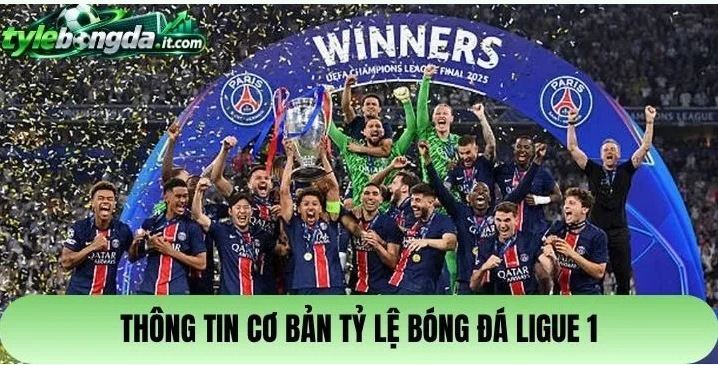
Ligue 1 is one of Europe’s most competitive football leagues, featuring talented players, ambitious clubs, and exciting matches throughout the season. From title contenders to teams fighting to avoid relegation, every fixture brings different tactical challenges and statistical considerations. Understanding Ligue 1 betting odds allows football enthusiasts to examine market expectations, evaluate team performances, and gain deeper insight into the factors that influence match predictions.
An Overview of Ligue 1 and Its Betting Markets
France’s top professional football division has established a strong reputation for developing exceptional young players and showcasing diverse tactical approaches. Clubs such as Paris Saint-Germain, Marseille, Lyon, Monaco, and Lille have contributed significantly to the league’s popularity.
The competition features teams with different playing philosophies. Some prioritize possession and attacking combinations, while others rely on defensive discipline, physical intensity, and counterattacking opportunities.
For readers following European football markets, platforms such as tylenhacai can serve as reference points for comparing published odds and examining how market expectations change before kickoff. However, any displayed prices should be checked against current information because football odds can fluctuate rapidly.
Why French Football Attracts International Attention
Ligue 1 is widely recognized for producing technically gifted players who later establish successful careers in major European competitions.
Its combination of established clubs and emerging talent creates intriguing matchups. Even when one team enters a fixture as the clear favorite, tactical adjustments and individual performances can produce unexpected results.
These characteristics make the competition particularly interesting for supporters who enjoy analyzing football statistics.
Understanding the Main Types of Ligue 1 Betting Odds
Football odds are offered across several markets, each representing a different aspect of the match.
Match Result Odds
The traditional 1X2 market includes three possible outcomes after regulation time: a home victory, a draw, or an away victory.
Bookmakers calculate prices using statistical models, available team information, and market considerations.
A stronger team generally receives shorter odds, but factors such as injuries, venue, recent form, and fixture congestion can significantly influence the numbers.
Asian Handicap Odds
Asian handicap markets introduce a virtual advantage or disadvantage to account for differences in perceived team strength.
For example, a club assigned a -0.5 handicap must win the match for that selection to succeed. A +0.5 handicap covers either a victory or a draw.
Whole-goal and quarter-goal handicaps have different settlement rules, so understanding the specific line is essential.
Over and Under Goals
Over/Under markets focus on the total number of goals scored by both teams.
An Over 2.5 selection requires at least three goals, while Under 2.5 covers matches finishing with two goals or fewer.
These odds are influenced by attacking efficiency, defensive performance, expected goals, and the tactical tendencies of both teams.
Important Factors That Influence Ligue 1 Odds
Football markets respond to changing information. A team favored several days before kickoff may receive different odds after an injury announcement or significant lineup change.
Recent Form and Performance Consistency
Recent results offer useful insight into a club’s current condition, but evaluating performances requires more than counting victories and defeats.
A team may collect several wins while creating relatively few scoring opportunities. Another may perform strongly but struggle to convert chances.
Reviewing the quality of opposition, shots created, defensive organization, and expected goals provides a more balanced perspective.
Squad Availability and Injuries
The absence of important players can influence a team’s tactical approach and overall effectiveness.
Missing central defenders may affect defensive stability, while the absence of creative midfielders can reduce attacking opportunities.
Confirmed team news is generally more informative than early speculation, especially when major fixtures are approaching.
Home Advantage and Travel Conditions
Playing at home can offer advantages through familiar surroundings, supporter involvement, and reduced travel requirements.
However, some teams perform effectively away from home because their tactical systems are suited to counterattacking situations.
Home and away statistics should therefore be examined alongside the quality of opponents faced.
How to Analyze French League Odds Effectively
Understanding Tỷ lệ nhà cái Ligue 1 requires combining market information with reliable football statistics rather than relying exclusively on previous match results.
One useful starting point is implied probability, which can be calculated from decimal odds.
Implied Probability = (1 ÷ Decimal Odds) × 100
For example, decimal odds of 2.00 represent an implied probability of 50%, while odds of 1.80 correspond to approximately 55.56%.
These percentages are not guarantees. They reflect market pricing before adjustments for bookmaker margins, which can make the combined implied probabilities exceed 100%.
Comparing these figures with independent statistical assessments can help readers understand why particular outcomes are considered more or less likely.
Essential Statistics for Ligue 1 Match Analysis
Statistics provide additional context when evaluating upcoming fixtures and interpreting market expectations.
Expected Goals and Attacking Performance
Expected goals, commonly known as xG, estimate the quality of scoring chances based on factors such as shot location and the circumstances surrounding an attempt.
Teams generating consistently high xG may be creating promising attacking opportunities even when recent results are disappointing.
However, different data providers use different models, and expected goals should not be treated as a definitive prediction tool.
Defensive Records and Clean Sheets
Defensive performance is another important consideration.
Goals conceded, shots allowed, clean sheets, and the quality of chances surrendered can help reveal how effectively a team protects its goal.
A club with strong defensive statistics may approach matches differently from an opponent that relies on open, attacking football.
Head-to-Head Results
Previous meetings between two clubs can provide historical context.
Nevertheless, older results may become less relevant following managerial changes, transfers, or significant tactical adjustments.
Current performances should generally receive greater attention than historical records alone.
Why Ligue 1 Betting Odds Change Before Kickoff
Odds movement is a normal feature of football markets.
Prices may change following lineup announcements, injuries, changes in tactical expectations, or substantial market activity.
For example, the confirmed absence of a leading goalscorer may affect expectations regarding the team’s attacking output.
Similarly, the announcement of a heavily rotated starting lineup can influence perceptions of match competitiveness.
However, changing odds do not prove that a particular outcome will occur. They simply reflect updated market assessments.
Common Mistakes When Evaluating Ligue 1 Matches
One common mistake is assuming that a famous club will automatically defeat a lower-ranked opponent.
Football outcomes depend on many factors, including preparation, tactics, fitness, and individual performances.
Another mistake is relying entirely on league standings without considering recent opposition quality or home and away differences.
Readers should also avoid treating consecutive results as evidence of a guaranteed future pattern. A team winning several matches in succession does not ensure another victory.
Statistical analysis can improve understanding, but it cannot eliminate uncertainty.
How to Follow Ligue 1 Odds and Match Information
Reliable football analysis begins with accurate information.
Official competition websites, club announcements, and established statistical providers offer useful details about fixtures, results, injuries, and team performances.
When reviewing published odds, readers should pay attention to timestamps because prices may change considerably between publication and kickoff.
It is also useful to compare information from several reputable sources rather than relying on isolated claims or unsupported predictions.
Responsible Approaches to Football Betting Information
Football odds can be studied as part of broader sports analysis, but they should never be confused with guaranteed financial opportunities.
Even carefully researched predictions can be incorrect because football matches contain significant uncertainty.
Where real-money betting is involved, individuals should comply with applicable laws and legal age requirements, understand the financial risks, and avoid treating betting as a source of income.
Maintaining realistic expectations is essential when interpreting probabilities and evaluating match information.
Conclusion
Ligue 1 betting odds reflect the relationship between team performances, statistical expectations, tactical considerations, and market activity. Understanding match-result markets, Asian handicaps, and goal totals provides a foundation for interpreting the numbers presented before each fixture.
By examining squad availability, recent performances, expected goals, and other relevant statistics, football enthusiasts can develop a more informed perspective on French football.
Ultimately, the most effective approach combines reliable information, careful interpretation, and an understanding that no prediction can guarantee the outcome of a match.