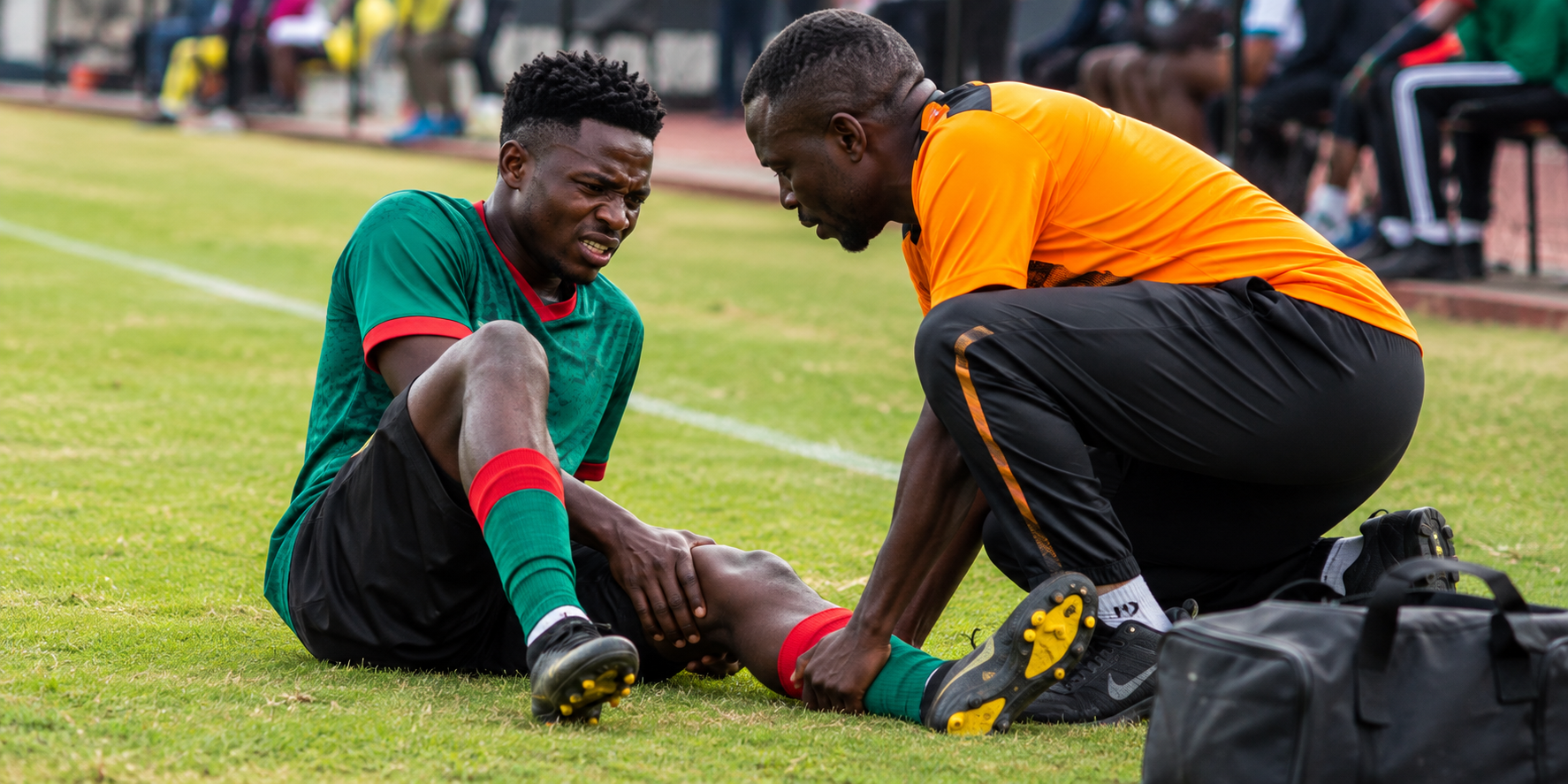
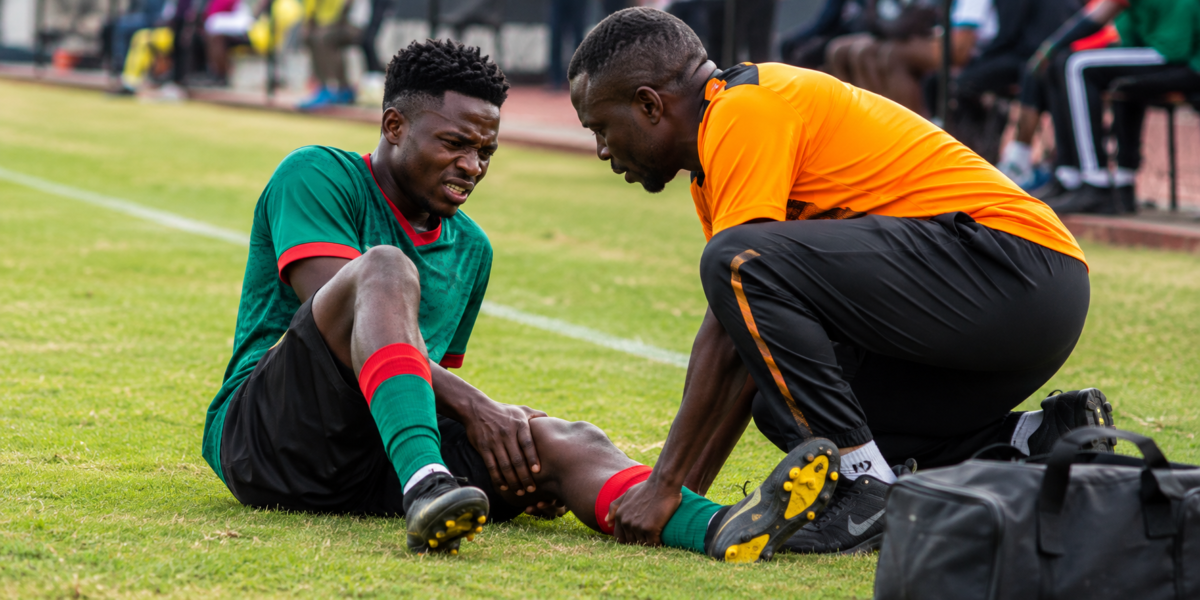
Alt: Footballer sits on the field while another man checks his injured leg
Injury information can change a betting forecast, but only when the absence affects how a team performs. A missing star may look important, yet the tactical impact can be limited if the replacement fits the same role. For bettors following sports betting in zambia, the useful question is not simply who is injured, but how the lineup and match conditions change because of that absence. Treating injury news as one part of a model helps prevent headlines from becoming betting signals.
Player importance matters more than reputation
The first step is measuring what the player contributes. Goals and assists are obvious, but they do not capture every role.
A defensive midfielder may reduce counterattacks, a center-back organize the line, and a goalkeeper influence build-up. Compare the player’s minutes, involvement, and team performance with and without them.
The more irreplaceable the role, the more likely the injury is to change the forecast. Reputation alone is weaker than tactical dependence.
Replacement quality changes the impact
An injury matters less when the backup can perform the same job. Squad depth is essential.
A team may lose its first-choice winger but replace him with another fast wide player who preserves the attacking structure. In contrast, losing a specialist left-back can force a central defender into an unfamiliar position and change both buildup and defensive coverage.
| Question | Why it matters |
| Is the backup experienced? | Reduces uncertainty |
| Does the role stay the same? | Preserves tactical structure |
| Will the formation change? | Can alter several markets |
| Are multiple players missing? | Injuries may compound each other |
The strongest betting adjustments come when the replacement creates a clear tactical difference rather than simply a name change.
Timing can distort the market reaction
The same injury can affect prices differently depending on when information becomes public. Early reports may be vague, while confirmed team news carries more weight.
If a rumor appears two days before a match, the market may move before the player’s status is certain. Confirmation can strengthen or reverse that move.
Bettors should distinguish between “doubtful,” “unlikely,” and officially unavailable. A forecast based on uncertain wording should carry less confidence than one built after the lineup is confirmed.
Matchup determines whether the absence is important
Not every missing player matters equally against every rival. A team may cope without its main striker against a deep defensive side but miss his pace badly in a transition-heavy match.
The opponent’s strengths can magnify or reduce an injury. Losing an aerially strong center-back becomes more serious against a team that relies on crosses, while an absent playmaker may matter more against compact defenses.
This matchup layer helps avoid overreacting to injury lists.
Several absences can change the whole structure
One injury may be manageable, but several in the same unit can create larger problems. Two missing full-backs, for example, can force a defense to change its shape rather than make one substitution.
Team-level data becomes useful here. Compare pressing intensity, expected goals, possession, and shots allowed in matches with similar personnel.
The same habit of separating evidence from emotion also applies during a plinko casino session, where one short run of outcomes should not be treated as proof of a reliable pattern. In both cases, a larger sample gives a more realistic picture.
Market movement needs an explanation
A price shift after injury news can be informative, but it should not replace analysis. The market may react strongly to a famous player, even if a capable replacement is available.
Bettors should ask whether the movement matches the expected tactical effect. If the absence changes chance creation, defensive stability, or set-piece responsibility, the adjustment may be justified.
If the price moves mainly around a big name, that reaction is less informative.
Good injury analysis stays proportional
Injury news should refine a prediction rather than dominate it. Form, venue, matchup, schedule, and overall team strength still matter.
Before adjusting a betting forecast, it helps to check a few points in order:
- confirm that the player is officially unavailable rather than only doubtful;
- identify who is expected to replace them and whether the role changes;
- compare the absence with the opponent’s main strengths;
- check whether the market has already reacted to the news;
- keep the adjustment proportional to the evidence rather than the player’s reputation.
A fixed betting budget also helps because late injury updates can create pressure to react quickly. Clear limits make it easier to wait for confirmation instead of increasing stakes based on uncertainty.
The best approach is to ask how much the injury changes expected performance, not whether an injured player is important in general. When role, replacement quality, timing, matchup, and market response point in the same direction, the adjustment becomes more defensible.