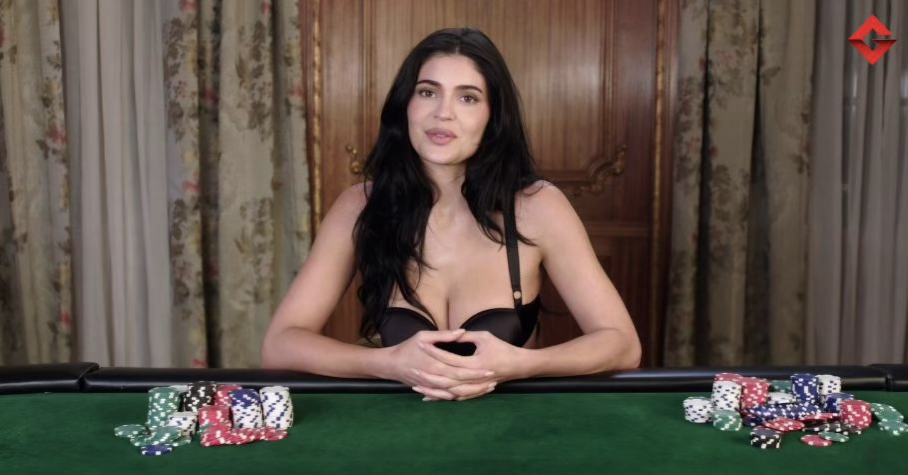
First, Kylie Jenner gave the game a celebrity jolt with her Vanity Fair feature and poker clip, talking about hosting poker nights and showing off quite a confidence. Then, almost before that wave had finished rolling through people’s feeds, Stake.com came back with Nina Drama and turned the whole thing into a cheeky parody that moved fast across Instagram and X. In a matter of days, the video “rate my poker outfit” reached over 4 million views.
The clip landed at the perfect moment, when the joke was still fresh and the audience was still in the mood to compare, repost, quote, and argue over who wore the outfit better.
The story is more fun than it looks at first glance. It is not just a brand doing a fast social media joke. It’s poker slipping back into the headlines. Not quietly. Not modestly. Not through some dry old school tournament clip with a commentator whispering about ranges. Poker barged back in through celebrity culture and got picked up by creator culture instantly.
A card table gives creators everything they want: outfits, attitude, little bursts of competition, flirtation, and a game people already know. That is a huge part of why Nina Drama’s clip went viral.
Poker Has Become Perfect for the Camera
Some games are fun to play and dreadful to watch. Poker has the opposite gift. It can make almost any room look like something is about to happen.
That is why poker keeps working in celebrity profiles, home game stories, and short form clips. The visual language is already built in. Cards stay hidden. Faces do not. People hesitate, raise, smirk, fold, pretend not to care, care too much, and try to sell stories with their posture before they ever sell them with chips. Even people who know nothing about pot odds can understand that tension. You don’t need to be an expert to sense that somebody is bluffing badly or trying very hard not to look rattled.
Kylie Jenner’s poker material worked partly because it treated poker as something personal and social, not just decorative. She described learning the game on a trip with friends, getting “obsessed,” watching tournaments, and hosting poker nights at home with Timothée Chalamet and his friends. That turned poker from celebrity accessory into something more believable: a real part of the social life she was describing.
Stake’s Nina Drama clip came from a different perspective. Instead of the polished, clean version of poker, it took a more knowing, playful route and had fun with the whole glitzy mood surrounding it. Rather than trying to pull viewers into some glamorous card table fantasy, it treated that fantasy as part of the joke and made parody the main attraction.
Kylie’s version made poker look chic. Nina Drama’s version made it look playable, jokeable, and easy to share. Together, they made poker feel less like some distant casino cliché and more like a cultural iconic game.
Poker is a bit different than other games on camera. It performs. There is always a reveal coming, always a chance for somebody to look brilliant or ridiculous, and usually both.
Poker At Home Has Its Own Kind of Pull
One thing that made this moment explode was that it didn’t revolve around giant tournament halls or televised pros. It revolved around the home game version of poker.
Poker nights at home have always had a special hold on people. A home game feels more personal than big stage poker ever can. You are not just watching cards, you are watching people show off, panic, bluff badly, get cocky too soon, or suddenly act like they are running the table the second one decent hand goes their way. That is what makes it fun to talk about after. A poker night at home is never just about the game. It’s a social event.
That’s why celebrity poker stories spread so fast. Kylie Jenner talking about poker nights at home with friends makes the game feel like part of real life instead of some staged little theme, and people latch onto that because poker tends to show more of someone’s personality than most games do. You learn things about people around a poker table. Not all of them are flattering.
Nina Drama’s parody taps into that same energy. The caption, the styling, the joke, the whole “rate my poker outfit” bit all point toward poker as social performance. Not just cards, not just strategy, but a room where everybody is being watched a little more closely than usual.
That home game fantasy also helps explain why poker keeps finding new audiences, it feels like something you could actually bring into your own life instead of only observing from afar.
Poker Knows How to Charm People
This is one of the oldest tricks in the game, and it still works. Poker makes people feel smart before it puts their confidence under pressure. That is a big reason it keeps winning fresh attention whenever culture swings back its way. The game looks simple enough to invite people in. The hand rankings can be learned. The table setup is familiar. The terms already live in everyday language. Then the actual game starts doing what poker always does. It introduces doubt. You make a read and second guess it. You catch a strong hand and wonder whether you are about to overplay it. You sense weakness and cannot decide whether it is real or bait. Suddenly the game that looked social and playful starts feeling like a stress test.
That tension is exactly why online poker games stay relevant in modern casinos. It gives viewers two pleasures at once. They can enjoy the glamour on the surface, but they also know there’s a bigger game behind all the glitz. Nina Drama’s clip worked because it lets people enjoy the first one without losing the second. It was light, but it was still about poker, and poker always arrives with a little edge attached.
The Online Story Behind the Jokes
This is not just a vibes story. Estimates are that the global online poker market stood at $3.86 billion in 2024 and projects it to reach $6.90 billion by 2030, growing at a compound annual rate of 10.2% from 2025 to 2030. Rapid growth points to cross platform play, mobile access, smoother product design, and gamified features as big drivers, while Texas Hold’em accounted for more than 62 percent of market share in 2024. In other words, the world’s most recognizable poker format is still the one dragging the widest audience behind it.
That’s why the timing of this Nina Drama video is so perfect. Poker is not trying to claw its way back from cultural irrelevance. It is already sitting inside a market that is growing. The content is giving people a flashy way in, but the underlying product category has real momentum behind it. The joke travels because the ground beneath it is solid.
The Beginners’ Boom
One of the most useful things about viral poker clips is that they make the doorway to the game feel less intimidating. Poker can still scare beginners off. Too many poker guys speaking like they are narrating a hostage negotiation. Too many myths about who belongs at the table and who doesn’t. Short form social content helps cut through that. It gives people a way into the culture before they have to deal with the tougher parts of the game. A clip can make poker look playful first, and that is often enough to get somebody curious enough to try it out.
Online poker has become easier to access and explore. Cross platform sharing and mobile friendly growth made a major impact in the sector, which fits the obvious reality of 2026: people want games that can travel with them. They want to watch clips, learn the basics, peek at a few strategy ideas, and then jump into digital formats. Poker is in a much better position to offer that than it used to be.
So yes, the Nina Drama clip is funny. Yes, it is cheeky. Yes, the outfit joke was catchy. But this is also happening at a time when poker already feels easier for new people to get into than it did a few years ago. The social clip is not the whole story. It is the shiny part of a much larger one.
Fast Hands Win Feeds
The internet loves to pretend virality is magic. It’s usually timing wearing good makeup.
Stake’s response was perfect because it was instant. It didn’t show up three weeks late with the dead eyes of a brand trying to join a joke after the guests had already left. It came in while people were still passing Kylie’s poker clip around and while the comparisons were still fun. That gave the post real speed.
Fast reactive content suits poker perfectly. Poker is all about timing. Wait too long and the spot is gone. Move too soon and you look reckless. Pick the moment right and suddenly it looks obvious in hindsight, which is usually how you know somebody judged it well. Stake’s Nina Drama clip had that feel. It felt fast, but not random.
There is also something funny about a poker brand winning attention by doing what poker players are always told to do: pay attention to the table and act when the opening appears. The original video created the opening. Stake took it. Nina Drama sold it. The feed did the rest.
Why Poker Always Finds Its Way Back
Because it can be too many things at once, and somehow that works in its favor.
Poker can be really glamorous. It can be tense, strategic, theatrical, and cold blooded all in the same sitting. That range gives it a huge cultural advantage. It can fit into a Vanity Fair feature, a creator parody, a late night home game, a strategy forum, a livestream, a mobile product, and a meme page without feeling completely out of place in any of them. Very few games can pull that off.
And it keeps holding attention. Better bluffing. Better discipline. Better reads. Better timing. Better emotional control. Better table presence. Poker feeds the fantasy that the next version of you might be smarter, sharper, calmer, and less obvious under pressure. People love that fantasy. They will chase it forever.
That is why this latest flare up around Kylie Jenner, Nina Drama, and Stake fits with poker. The game can absorb all that extra styling, but underneath the outfit, the captions, the parody, and the shareable clips, poker is still the same strange, elegant troublemaker it has always been.
Poker’s charm lies in its initial light feeling that people have once they gather enough courage to step to the table. The game works great in front of the camera or as a joke on some celebrity reel. It’s flexible, but it always keeps that core of the game intact.
Poker will quietly test your judgment, nerve, timing, and how well you handle pressure once the hand is dealt.
That’s why this Nina Drama moment worked so well. The video gave people the easy part first. The outfit, the parody, the wink, the whole playful mood of it. But poker was always going to do the heavier lifting in the background. Poker gives that kind of content sharper edges. It makes a joke feel more charged and glamorous, but it always keeps the composure behind the scenes.
And that is probably why the game keeps finding its way back into the spotlight. Trends come and go, but poker has a built in tension that never really goes out of date. Dress it up however you like. Make it funny or captivating, chaotic or alluring; it still ends up being poker that keeps pulling people in because it offers more than a quick thrill. It gives people the feeling that they might outplay the room if they keep their heads long enough. The mix of spectacle and strategy is very hard to fake, which is why poker still looks so good every time social media personalities decide to flirt with it again.