Behind every World Cup group draw lies a ranking system that determines which teams are seeded where, which groups become “groups of death,” and which teams receive the most favorable paths to the knockout stages. For the 2026 FIFA World Cup, with its expanded 48-team format and 12 groups, the ranking-based seeding system is more consequential than ever. Understanding how it works isn’t just academic — it’s essential for anyone who wants to analyze the tournament’s competitive dynamics.
The Algorithm Behind the World’s Biggest Tournament
FIFA’s ranking system underwent a major overhaul in 2018, switching from a points-based system to an Elo-based algorithm. This change was designed to produce more accurate rankings by weighting match results based on opponent strength, match importance, and expected outcomes. The result is a system that better captures team quality, but one that also introduces complexities that casual fans often overlook.
How the Seeding System Works
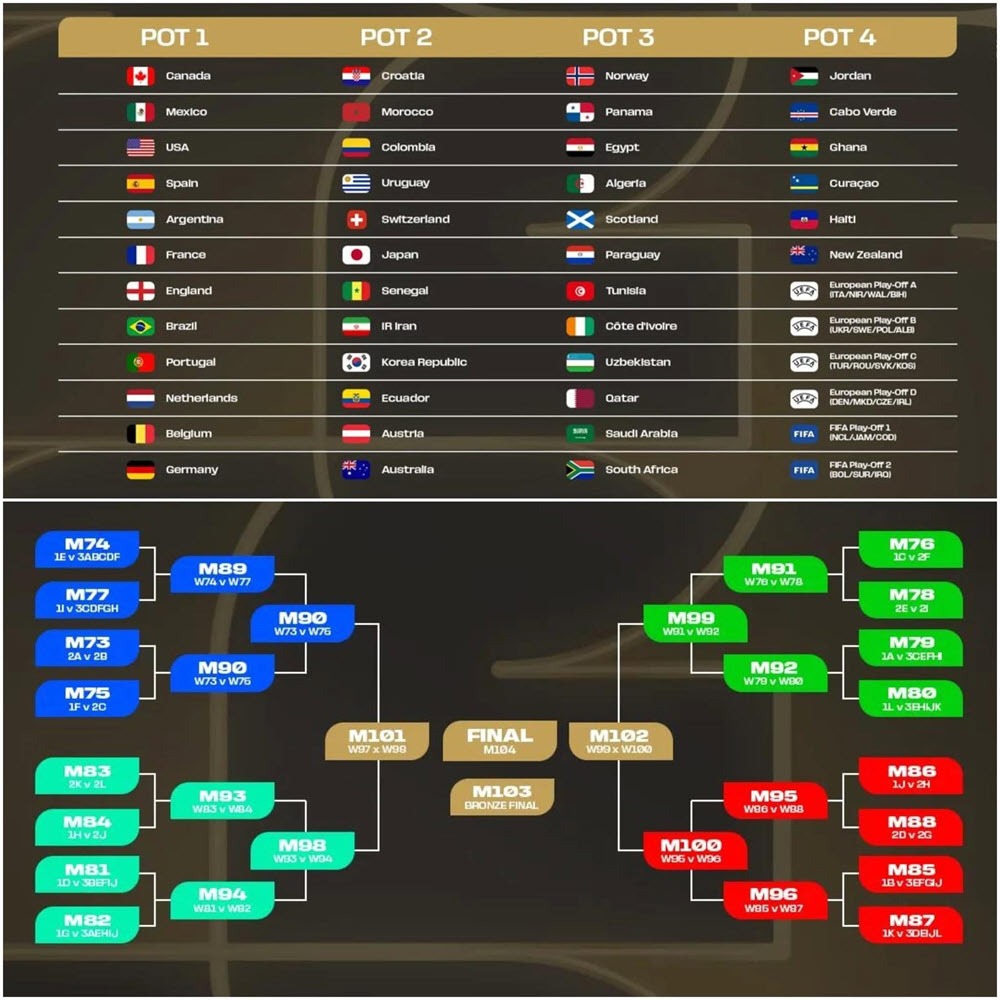
For the 2026 World Cup, the 48 qualified teams will be divided into four pots based on their FIFA ranking at the time of the draw. Pot 1 contains the 12 highest-ranked teams (including automatic placement for the three host nations), while Pots 2 through 4 contain the remaining teams in descending ranking order. Each group of four must contain exactly one team from each pot, creating a structured but unpredictable combination of opponents.
This seeding mechanism means the difference between being ranked 12th and 13th could determine whether a team is in Pot 1 (guaranteeing they avoid all other top-12 teams in the group stage) or Pot 2 (where they’ll face one top-12 team). For analysts tracking fifa 월드컵 2026 순위 (FIFA World Cup 2026 rankings), these threshold positions are critical. Korean platforms closely monitor ranking movements near pot cutoff lines, as a single position change can dramatically alter a team’s group-stage outlook.
Geographic Constraints and Their Impact
The draw also enforces geographic constraints: no group can contain more than one team from the same confederation (with the exception of UEFA, which has enough qualifying spots to require some groups to contain two European teams). This constraint interacts with the seeding system to limit the total number of possible group compositions, making some matchups more likely than others.
For Asian teams, the geographic constraint means no AFC teams will share a group, spreading them across different sections of the bracket. This has significant implications for potential knockout-stage matchups, as Asian teams that advance from their groups might face each other in later rounds depending on the bracket structure.
Rankings vs. Actual Tournament Performance
History shows that FIFA rankings are a reasonable but imperfect predictor of World Cup performance. Analysis of the last five World Cups reveals that Pot 1 teams advance from the group stage approximately 85% of the time, while Pot 4 teams advance around 35% of the time. However, the most memorable World Cup moments often come from teams that defy their seeding — South Korea’s 2002 semifinal run from a lower pot, Greece’s unlikely European Championship victory in 2004, Morocco’s 2022 semifinal appearance.
The expanded format amplifies this dynamic. With 32 of 48 teams advancing from groups, even lower-ranked teams have realistic qualification probabilities. Mathematical models suggest that Pot 4 teams in the 2026 format will advance approximately 45–50% of the time, a significant increase from the 32-team format, making upsets in the group stage more common and rankings less deterministic.
What Rankings Tell Us About the 2026 Tournament
The current rankings paint a picture of a tournament with a strong top tier (Brazil, France, Argentina, England) followed by a deep and competitive middle class (Spain, Germany, Netherlands, Portugal, Belgium, and several emerging nations). The gap between the top-ranked teams and the middle of the pack has narrowed in recent years, largely due to the globalization of player development and tactical knowledge.
For those analyzing tournament winner markets, the rankings provide a useful baseline for assessing each team’s chances. In South Korea, fans searching for 월드컵 배당률 (World Cup odd) often cross-reference ranking positions with odds to identify discrepancies. When a team’s ranking suggests they should be priced as a contender but the odds market treats them as an outsider (or vice versa), that gap represents a potential analytical insight worth investigating.
Looking Forward
As the 2026 World Cup draw approaches, every qualifying result and friendly match outcome carries ranking implications. Teams on the cusp of pot boundaries are playing for more than just wins — they’re playing for tournament positioning that could define their entire World Cup experience. For fans and analysts who understand this system, the drama starts long before the first ball is kicked in North America.